.jpg)
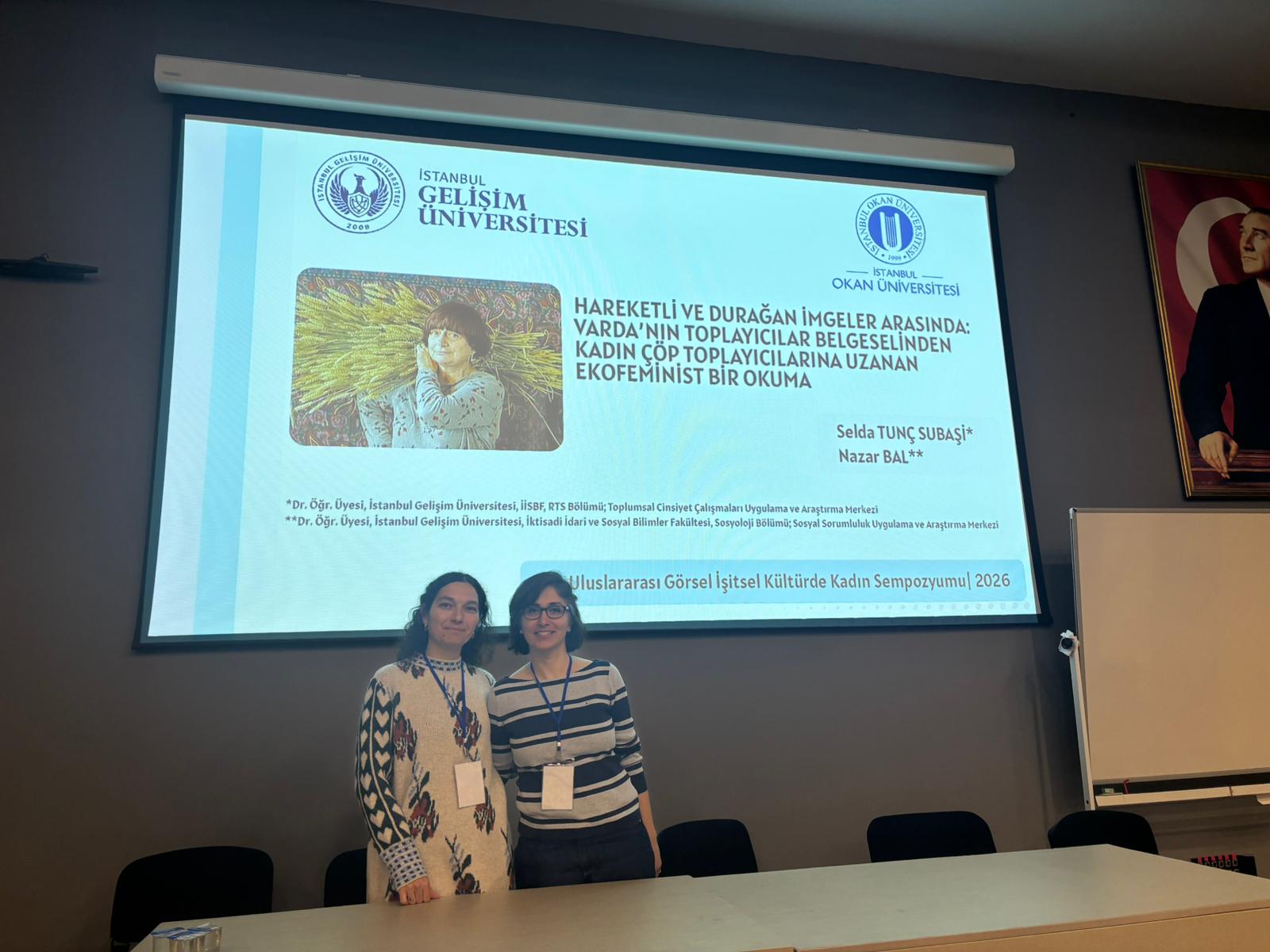
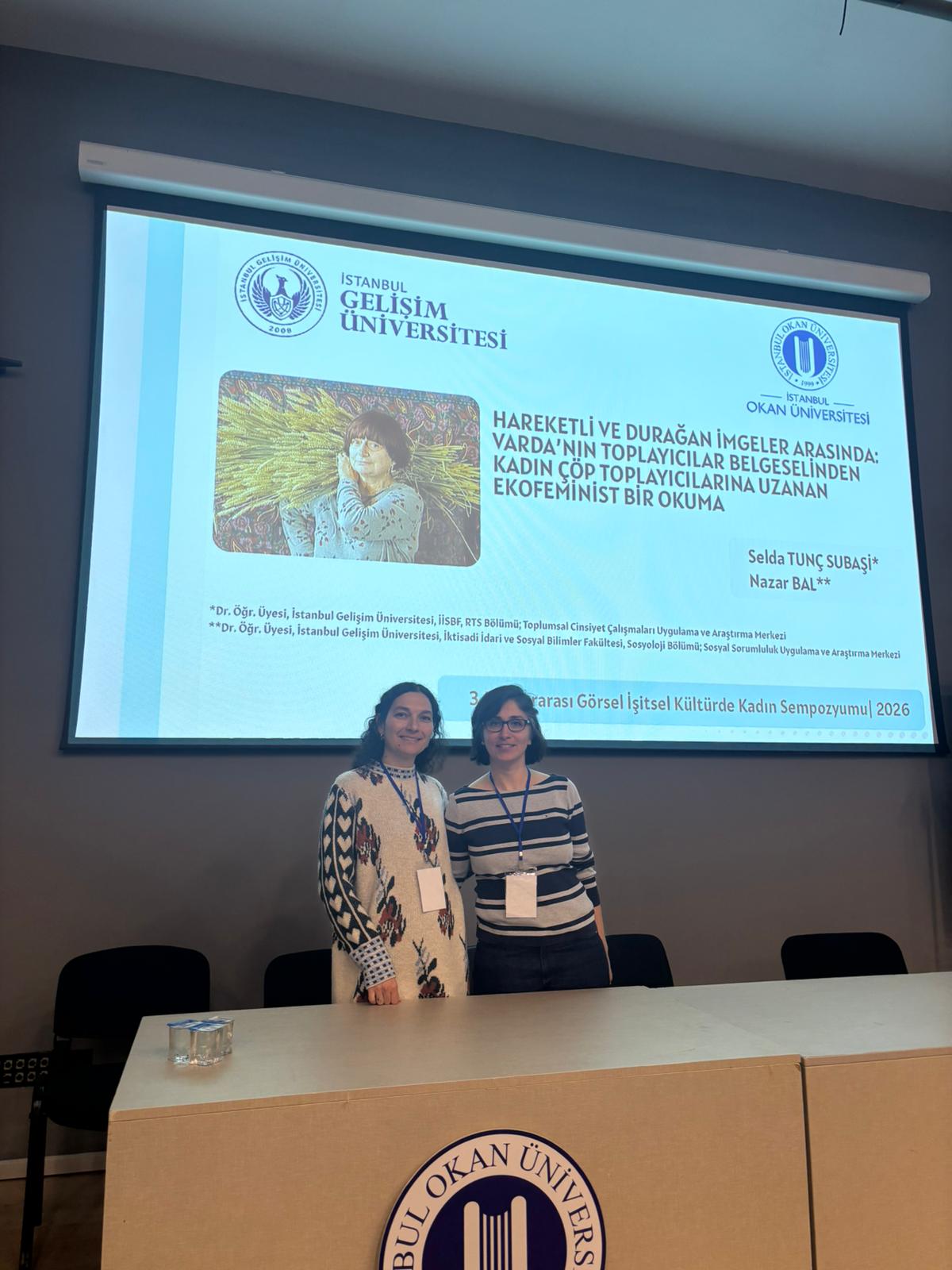
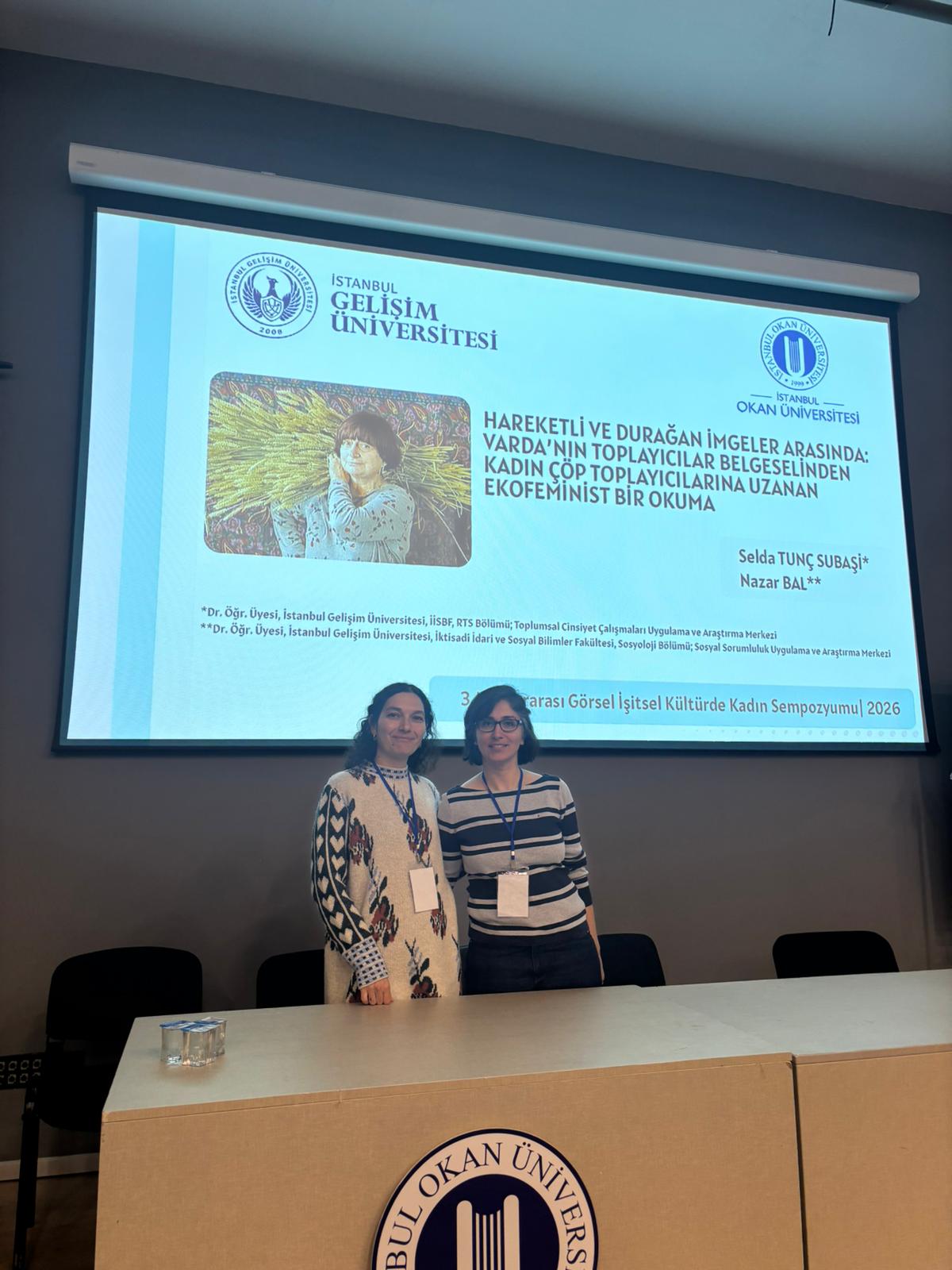
Researchers presented a paper titled “Between Moving and Still Images: An Ecofeminist Reading from Varda’s The Gleaners and I to Women Waste-Pickers” in the session “Women, Ecology and Spatial Subjectivity,” in which they addressed the phenomenon of gleaning from an ecofeminist perspective.
The study, drawing on Agnès Varda’s documentary The Gleaners and I (Les glaneurs et la glaneuse, 2000), emphasized that the practice of gleaning can be understood not only within the context of poverty and consumer culture, but also as a multifaceted phenomenon shaped by the relations between nature, the body, and labor. The paper further treated “women waste-pickers” as a distinct layer of analysis, drawing attention to their lived conditions marked by urban poverty, precarity, health risks, and social stigmatization.
In the study, photographs taken by the researchers as well as images of women waste-pickers reflected in news photography were analyzed within a qualitative research framework. The visual materials were examined through descriptive analysis and visual discourse analysis techniques within the framework of visual methodology, while the ethics of care approach provided a theoretical ground for conceptualizing women’s invisible labor and relations of responsibility.
The findings indicated that in Varda’s documentary, women are represented in more humane, ethical, and aesthetic dimensions, whereas in contemporary photographs, women waste-pickers are predominantly portrayed as marginalized, invisible, and economically disadvantaged figures. The presentation argued that such representations reproduce stigmatization through social prejudices, class-based inequalities, and gendered norms.
In conclusion, the paper emphasized that gleaning is not only a survival strategy but also a life practice intertwined with care labor, functioning both as a form of resistance and a visible example of social exclusion. When Varda’s visual narrative is considered alongside contemporary images of women waste-pickers, it becomes possible to construct a critical reading that extends from ecofeminist narratives to the destructive urban poverty dynamics of neoliberalism.
Agnes Varda Sunumu